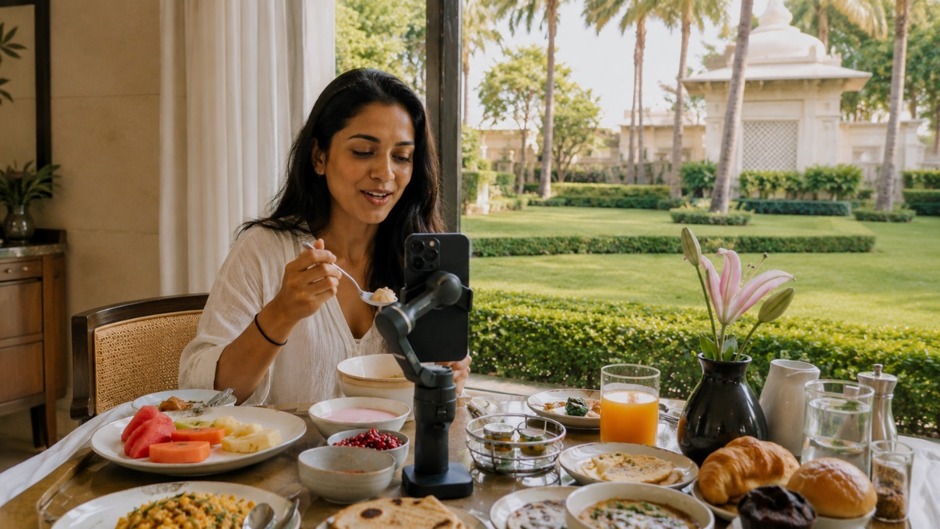
Growing Role of Influencer Marketing for Hospitality Brands
Why Influencer Marketing Has Become Serious Business for Hospitality Brands
Influencer marketing for hospitality brands in India is no longer an experiment or a nice-to-have addition to a marketing budget. It is one of the primary channels through which hotel brands are building awareness, driving consideration, and in a growing number of cases generating direct bookings.
The brands that treated it as an afterthought in 2023 are noticing the gap now. The ones that built proper influencer programmes are sitting on an asset that compounds rather than resets with every campaign.
What Actually Changed
The shift has happened across several dimensions at once. The audience has changed. The platforms have changed. And the influencer ecosystem itself has matured in ways that make the work more accountable and more useful than it was three years ago.
On the audience side, the research on how travellers make decisions has become clearer. A significant proportion of hotel booking decisions in 2026 are influenced by content encountered on social platforms before any search happens. The prospective guest has already seen three or four pieces of content featuring a property before they visit the website. The influencer content is doing consideration work upstream of the channel where most hotel brands are measuring it.
On the platform side, the algorithm changes that elevated short-form video have been directly good for hospitality influencer content. A creator spending two days at a property and producing ten to fifteen pieces of short-form video content is generating more genuine reach and engagement than a brand producing polished photography campaigns at significantly higher cost. The content feels like a recommendation from someone the viewer follows rather than an advertisement from a brand, which is precisely why it performs differently.
On the influencer side, the ecosystem has matured past the phase where follower count was the primary evaluation metric. The best hospitality social marketing agencies in India are now working with creators based on engagement quality, audience geography, audience travel intent, and content consistency rather than raw reach numbers. A travel creator with 80,000 highly engaged followers who are predominantly from Tier 1 Indian cities with demonstrated travel intent is worth considerably more to a hotel brand than a lifestyle creator with 500,000 followers whose audience skews toward demographic segments that do not book hotel stays.
What Good Hospitality Influencer Marketing Looks Like in 2026
The hospitality brands getting the most value from influencer marketing in 2026 are not the ones running the most campaigns. They are the ones running the most intentional ones.
The first thing that separates good hospitality influencer marketing from average is creator selection based on actual audience data rather than surface metrics. The top hotel social media agencies in India are pulling audience demographic reports, checking engagement authenticity, reviewing past branded content performance, and assessing whether the creator’s existing audience matches the hotel’s target guest profile before any conversation about collaboration begins. This sounds basic but it is still not how a lot of hospitality influencer spending is being made.
The second thing is content brief quality. The brands that are producing the best results are giving creators enough context about the property’s specific character and the guest experience they want communicated while leaving enough creative freedom for the content to feel like the creator’s own voice. Overly scripted influencer content reads as scripted. The audience knows the difference and the engagement data reflects it.
The third thing is duration and volume. A single influencer staying one night and posting once is not an influencer programme. It is a one-off. The luxury hotel marketing agencies in India that understand the channel are building recurring relationships with a smaller set of well-matched creators, producing content across multiple visits and multiple formats, and building a body of third-party content around the property that has genuine longevity in the algorithm.
The Luxury and Upper-Upscale Segment Specifically
For luxury hotel brands in India, the influencer channel has a specific dynamic that is worth understanding separately from the broader market. The audience that books luxury hotel stays is consuming travel content on social platforms but it is doing so with a different kind of scepticism than the mid-market audience. It knows what paid partnerships look like. It responds to specificity rather than general enthusiasm. And it is more likely to be influenced by a creator it genuinely trusts than by high follower counts or polished production.
The best luxury hotels social media agencies in India have adapted to this by focusing on long-form storytelling content alongside short-form, on creators with genuine expertise in travel or lifestyle rather than pure entertainment creators, and on authenticity signals that cannot be manufactured.
One hotel brand general manager described the shift precisely. His property had run several high-reach influencer campaigns in previous years with impressive impression numbers and minimal booking impact. After working with an agency that matched creators specifically on audience travel intent and gave them genuine access to the property experience rather than a structured itinerary, the booking enquiries from social platforms increased measurably over the following quarter.
The Measurement Question
Measuring influencer marketing for hospitality brands is harder than measuring performance campaigns and it is worth being honest about that rather than pretending otherwise. The contribution is real but it is upstream and attribution is imperfect.
The approaches that work best combine branded search lift tracking with social referral traffic analysis and direct booking source surveys. When a guest books and answers how they heard about the property, the proportion crediting social and content discovery has been increasing steadily. The top hotel marketing agencies in India are building measurement frameworks that capture this upstream contribution rather than measuring influencer campaigns solely on direct click attribution, which systematically undercounts the channel’s value.
Templatolio works with hospitality brands on influencer marketing strategies that are built on proper creator selection, intentional content briefs, and measurement frameworks. If your current influencer approach is not producing results proportional to the spend, the problem is almost always in the brief quality, the creator selection methodology, or the measurement approach rather than the channel itself.
Frequently Asked Questions
1.Why has influencer marketing become important for hotel brands in India in 2026?
A significant proportion of hotel booking decisions are now influenced by social content encountered before any search happens, making influencer marketing a primary consideration-stage channel.
2. How do the best hospitality digital marketing agencies in India select influencers for hotels?
Through audience demographic analysis, engagement authenticity checks, travel intent signals, and match between creator audience and hotel guest profile.
3. What content format works best for hotel influencer marketing in 2026?
Short-form video for reach and discovery, combined with longer storytelling content for consideration-stage audiences and repeat engagement.
By prioritising creator authenticity, genuine travel expertise, and specificity of storytelling over reach and follower volume.
5. How long should a hotel influencer programme run to see meaningful results?
Recurring creator relationships across multiple visits over three to six months produce compounding results that single campaign activations do not.
6. How do top hotel social media agencies measure influencer marketing impact?
Through branded search lift, social referral traffic, direct booking source surveys, and engagement quality rather than impression volume alone.
7. What is the biggest mistake hotel brands make with influencer campaigns?
Choosing creators based on follower count rather than audience quality and travel intent, and over-scripting content in ways that remove the creator’s authentic voice.
8. Does Templatolio work on influencer marketing for luxury hospitality brands?
Yes, Templatolio builds and manages influencer programmes for hotel brands and hospitality businesses with a focus on creator quality and measurable impact.
9. What budget should a hotel brand allocate to influencer marketing in India?
This varies by property type and objectives, but the allocation should reflect the channel’s upstream contribution to booking decisions rather than just direct attribution.
10. How do I start an influencer marketing programme for my hotel with Templatolio?
Visit templatolio.com and reach out directly to discuss your property, target audience, and what a properly structured influencer programme would look like.
Is Your Hospitality Brand Getting Real Value from Influencer Marketing?
Templatolio works with hotel brands and hospitality businesses across India on influencer strategy built around proper creator selection, content that performs, and measurement that reflects the channel’s actual contribution.
Email: info@templatolio.com
Visit : https://templatolio.com/
Click here to Talk to the team.